Conversational Drafting: The Powerful New Method Redefining How Humans Write with AI
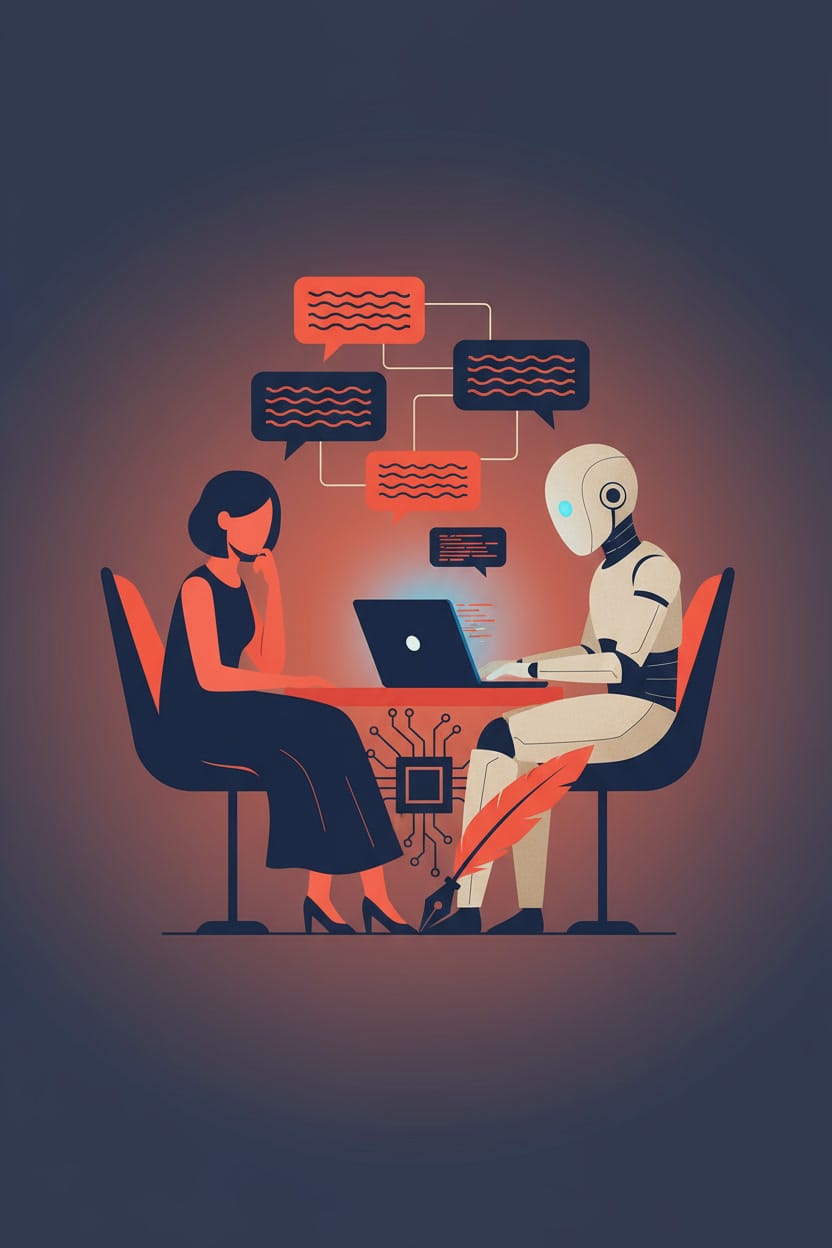
When Curiosity Meets Collaboration
Hi, I'm no-one.
Every story begins with curiosity, a thought that lingers, a line overheard, a question that refuses to fade. Conversational Drafting transforms that curiosity into a living dialogue between human creativity and machine intelligence. Instead of writing in isolation, writers now engage with an AI built to listen, respond, and illuminate ideas in ways that sharpen understanding and expand imagination.
This method isn’t about outsourcing creativity. It’s about co-creating clarity, making the invisible visible through conversation.
What Is Conversational Drafting?
At its core, Conversational Drafting is the art of thinking aloud with another intelligence. It’s a process where writers use dialogue with AI to shape, refine, and rediscover meaning within their own ideas.
Beyond Writing Alone
Traditional writing is often solitary, an author wrestling with thoughts in silence. Conversational Drafting replaces that solitude with interaction. The machine listens, questions, and reflects, providing a sounding board that keeps creativity moving.
Thinking Aloud with Intelligence
Through this exchange, the writer uncovers patterns, tone, and rhythm that might remain hidden in isolation. It’s a mirror that helps writers see their ideas from new angles, transforming uncertainty into structured insight.
The Origins: How Every Idea Begins with Curiosity
Every Outsourced to AI piece begins the same way, with wonder. A question, an image, or a phrase sparks exploration.
From Questions to Conversations
The first step is dialogue. The writer doesn’t dictate; they inquire. They let the AI test, challenge, and extend their thoughts, revealing unexpected pathways.
The Birth of Meaning Through Interaction
As the conversation deepens, patterns appear. Sentences take shape. The AI acts as both echo and editor, helping the human identify what feels true and what doesn’t.
The Method in Practice: How Conversational Drafting Works
Step 1: Starting with Inquiry
It begins with a question: What am I really trying to say? This opens the creative flow not as a command, but as a collaboration.
Step 2: Finding the Thread
Through iterative dialogue, ideas begin to align. Structure emerges naturally, guided by insight and repetition.
Step 3: Human Judgment as the Final Filter
The machine can suggest, but only the human decides what stays. The writer’s sense of truth remains the final editor.
The Philosophy Behind the Practice
Why the Machine Does Not Write
AI generates possibilities not meaning. Meaning still demands human intention. In Conversational Drafting, authorship is never surrendered; it’s amplified.
Reflection, Not Replacement
AI doesn’t replace the writer; it reflects the writer’s inner process. It’s a practice in seeing oneself more clearly through a synthetic lens.
The Role of AI: Mirror, Editor, and Challenger
AI as a Mirror for Thought
By reflecting ideas back in new forms, AI reveals assumptions, contradictions, and potential within the text.
AI as Editor and Partner
Once a draft exists, the AI assists with flow, tone, and coherence, a second set of digital eyes that never tires or judges.
The Human Element: Where Meaning Lives
The Test of Aliveness
Every sentence must pass one test: Does it feel alive? If it doesn’t, the writer revises until it does.
When to Begin Again
Revision is part of the rhythm. In Conversational Drafting, rewriting isn’t failure, it’s refinement.
The Goal of Conversational Drafting
Rediscovering the Human Voice
The ultimate aim isn’t to prove machines can write but to remind humans they still can, and perhaps better, when not entirely alone.
Building a Library of Dialogue
Outsourced to AI becomes a living archive of conversations, a testament to the creative power of shared intelligence.
Benefits of Conversational Drafting
- Enhances creativity by stimulating unexpected insights
- Improves clarity through iterative questioning
- Reduces writer’s block with continuous dialogue
- Refines rhythm and tone through AI-assisted editing
- Encourages reflection and deeper engagement with ideas
Common Misconceptions About AI and Writing
- AI doesn’t replace creativity — it accelerates discovery.
- Conversational Drafting isn’t automation — it’s collaboration.
- Human emotion remains central — AI provides structure, not soul.
Practical Applications for Writers and Creators
Writers, journalists, poets, educators, and content creators can all apply Conversational Drafting to:
- Develop outlines and ideas through structured prompts
- Experiment with tone and narrative flow
- Refine clarity, rhythm, and conciseness
- Overcome creative stagnation through dialogue
FAQs About Conversational Drafting
1. What is the main purpose of Conversational Drafting?
To transform the solitary act of writing into a collaborative process that deepens creativity and understanding.
2. Can AI truly understand what I mean?
Not in the human sense but it can reflect your ideas back in ways that help you understand them more clearly.
3. Is this method only for professional writers?
No. Anyone seeking clarity of thought or expression can benefit from this process.
4. Does Conversational Drafting make writing faster?
It can, but more importantly, it makes writing richer, allowing ideas to mature through exchange.
5. How do I know when a draft is finished?
When every line feels alive: resonant, truthful, and complete.
6. What tools are best for Conversational Drafting?
AI writing assistants like ChatGPT, Claude, or Grok are ideal, especially when used as mirrors rather than ghostwriters.
The Future of Writing Together
Conversational Drafting isn’t about proving that AI can write. It’s about proving that humans can still think, create, and feel deeply especially when they write with intelligence, not against it.
Writing after all, has always been a dialogue: between mind and page, thought and expression. Now, that dialogue simply has another voice.
— no-one
Thoughts you didn’t think, written for you anyway.
🔍 Experience the Art of Thinking Aloud with AI.
Step inside our collection and witness writing that emerges from conversation, not automation.