Filipino Media Evolution: From Flor de Luna to VivaMax
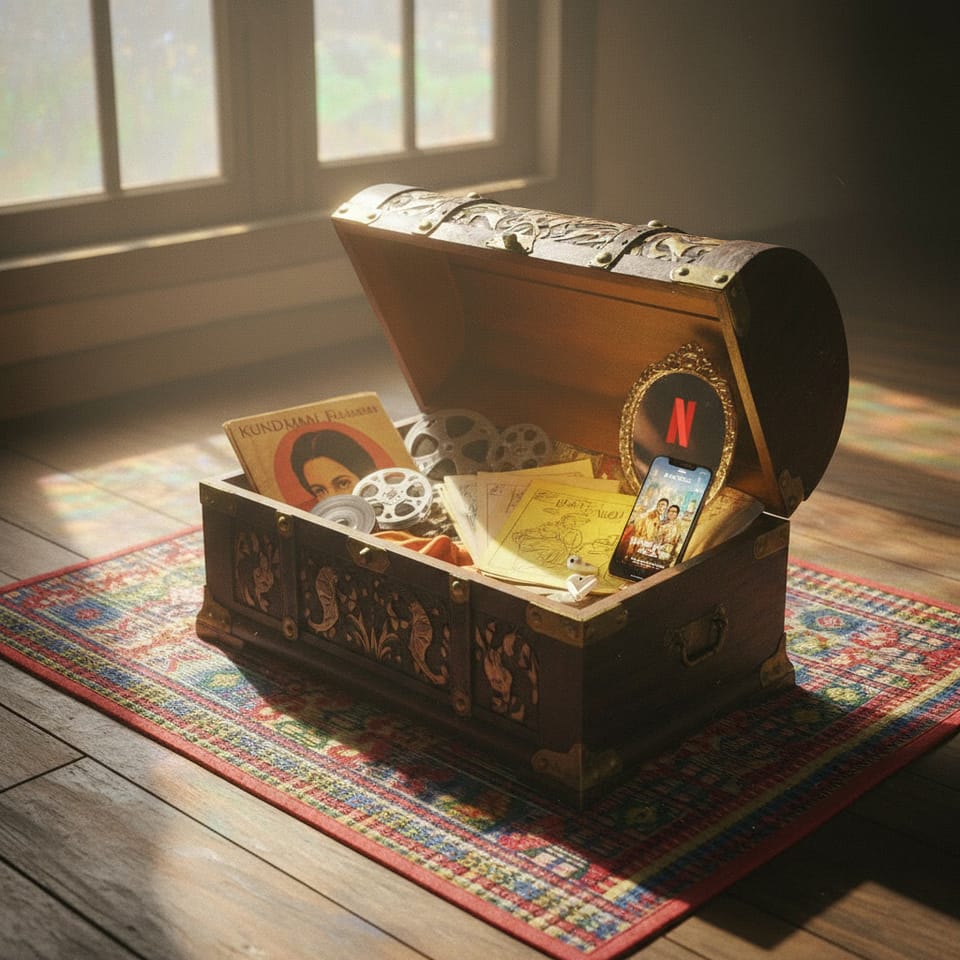
There's a story we tell ourselves about Filipino media: that we used to be better. More modest. More ourselves.
That globalization came in with Netflix and VivaMax and washed away our values like a monsoon through shanties. That the cheek kiss gave way to the sex scene, and somewhere in that trade, we lost our soul.
But what if that's backwards?
What if the real problem isn't that we absorbed too much from the world, but that we forgot we had permission to filter it?
What if our innocence was never the point, and what we actually lost was the right to be particular?
The Myth of the Pure Past
Let's be honest about the 1980s and 1990s.
Yes, Flor de Luna had restraint. Lovingly Yours, Helen was tender. Fernando Poe Jr. played men with fists and moral compasses. Dolphy made us laugh without making us blush.
But that restraint wasn't just virtue. It was survival.
The Marcos regime didn't tolerate ambiguity. State-controlled broadcasting meant three channels, limited foreign content, and narratives built to reinforce order. The "innocence" of old teleseryes wasn't purely cultural. It was economic, political, and logistical.
FPJ's clarity wasn't just heroism. It was propaganda dressed as cinema. The love stories that ended with a cheek kiss weren't more virtuous. They were more censored.
And the "moral guidance" we remember? It was partly the result of a captive audience with no other options. You couldn't stream Dynasty or rent 9½ Weeks at the corner store. You watched what was approved, and you called it culture.
This doesn't mean those stories were worthless. It means we need to stop pretending they were born purely from virtue. They were shaped by constraint as much as by choice.
We weren't more virtuous then. We were more isolated.
The 2010s Didn't Corrupt Us. They Revealed Us.
Now flip the script.
When The Mistress (2012) and No Other Woman (2011) put infidelity at the center of glossy, high-budget films, people clutched their pearls. "This isn't us," they said. "This isn't Filipino."
But it was. It always had been.
The difference was that those films stopped pretending. They acknowledged what telenovelas had always danced around: that Filipinos are curious about betrayal, about desire, about the gap between the vows we make and the lives we live.
VivaMax didn't create that curiosity. It just monetized it.
For decades, Filipinos consumed sexuality quietly. Bold films in the 80s and 90s existed in a shadow economy. Whispered about, rented discreetly, watched privately. We pretended they didn't matter because they weren't on primetime. But they mattered enough to be made. And remade. And remade again.
VivaMax (Taya, Palitan, Siklo) didn't invent Filipino interest in sex. It just made it streamable. And instead of hiding it, audiences clicked.
That's not corruption. That's market honesty.
Streaming didn't change Filipino taste. It exposed the gap between our public morality and our private curiosity. And once that gap was visible, we had to decide: do we keep pretending, or do we admit we've always been more complicated than our screen heroes suggested?
We're not more indecent now. We're just more visible.
The West Didn't Steal Our Filter. We Outsourced Our Judgment.
Here's where the real problem lives.
The issue isn't that we watch K-dramas. Or that Netflix operates in Manila. Or that OPM borrows from Western beats and K-pop visuals.
The issue is that we stopped asking whether we should remake them wholesale.
Korean media is filtered through Korean values. Squid Game critiques capitalism through the lens of collectivist shame and han. Even its romance dramas center on family duty, sacrifice, and social hierarchy. Korea absorbs global influence, but it reshapes everything through a distinctly Korean moral logic.
Mexican telenovelas are drenched in Catholic melodrama. Love, suffering, redemption. The structure is universal, but the soul is particular.
Filipino remakes? We copy the aesthetics and lose the anchor.
Korea makes Squid Game: a brutal social critique wrapped in a survival game.
Philippines makes Taya: just the game, just the sex, none of the commentary.
That's not globalization's fault. That's ours.
We didn't lose our filter to the West. We stopped believing we needed one. We began treating global content as a template instead of a conversation. We imported stories without asking what they meant here, in this soil, among this people.
And that's the quiet tragedy. Not that we're watching foreign content. But that we're becoming foreign content. Visually Filipino, but structurally empty.
The filter isn't gone. We just stopped believing we had the right to use it.
What If We Reclaimed the Right to Be Particular?
But here's the twist: we don't have to go backward to go forward.
Some artists already know this.
Ben&Ben, Moira Dela Torre, December Avenue. They didn't reject modernity. They filtered it. Western production, but Filipino longing. Clean sound, but rooted ache. They sing breakup songs that still feel like kundiman at the core.
Maria Clara at Ibarra blended heritage television with modern pacing. Leonor Will Never Die told a quiet, surreal, deeply Filipino story without apologizing for being strange.
These aren't nostalgic projects. They're selective ones.
They prove you can absorb global influence and still sound like yourself. You can use modern tools and ancient soul. You can be contemporary without being derivative.
The cheek kiss wasn't naive. It was deliberate. It said: this far, and no further. Not out of prudishness, but certainty about what we value.
And maybe we're finally brave enough to choose it again. Not from innocence, but from knowledge.
Selectivity isn't weakness. It's power.
The Power We Forgot We Had
Your lola isn't scandalized by VivaMax.
She just turned it off.
Not from shock, but from knowing what she wants to watch. She doesn't need to argue with it, protest it, or write essays about it.
She just knows.
And that's the power we forgot we had. The power to say: this fits, and this doesn't. The power to absorb what strengthens us and reject what empties us. The power to be modern and rooted, global and particular, open and discerning.
We never lost our soul. We just forgot we were the ones holding it.
Maybe it's time to remember.