Neezer Skroob Chapter 1 - The Books Were Cooked
Carole of Betrayal
Bob Cratchit, meek these many years,
Now held the key to Scrooge's fears.
Gold once given turned to chain,
And kindness bought but bitter pain.
The year was 1848, and London bustled with new gaslight and new fortunes. Five winters had passed since Ebenezer Scrooge's redemption, five winters since three spirits rattled his windows and his heart. In those years, he had worked as if to erase all memory of his miserliness. Coal for the cold, coin for the hungry, charity for the nameless poor. His hand had been open when once it had been tight as a lockbox.
For a while, it was glorious. People spoke of him as if he had leapt from Scripture itself. The miracle of Scrooge. The miser turned saint. The man whose name had once soured a child's laugh now blessed the very season he had despised. There were dinners at Fred's, donations applauded in the Times, nods of recognition from men who once crossed the street to avoid his glare.
But five years is long enough for memory to dull, long enough for miracles to be expected. And kindness, Scrooge discovered, rarely ages well. The first years, when he pressed coins into trembling hands, he saw tears, blessings, even songs whispered after him. By the fifth, a coin was met with a nod, and sometimes not even that. Gratitude faded to habit. Habit soured to entitlement.
He remembered a morning not three months past. A woman outside St. Dunstan's, thin as a winter branch, had held out her palm. Scrooge pressed a shilling into it. She looked at the coin, then at him, and said nothing. No blessing. No tears. Only a nod, brisk as a transaction, before she turned away. He had stood in the street long after she vanished, the cold seeping through his coat, wondering when charity had become so small a thing.
And Scrooge, though determined to keep his heart warm, began to feel the chill of disappointment settle back into his bones.
The greatest change of all had been Bob Cratchit.
How proud Scrooge had been to raise his clerk, once hunched and trembling by the weak fire, into full partnership. A kindness, yes, but also a declaration: that the old Scrooge was dead, and a new one walked among men. Bob had accepted with tears in his eyes, the children clapping their thin hands, Mrs. Cratchit declaring it proof that miracles did not end with Christmastide.
At first, Bob's humility was nearly painful to behold. He worked long hours, minding every line of ledger as if it were scripture. He thanked Scrooge endlessly, and Scrooge, in turn, basked in the glow of his own benevolence. But five years was a long season for gratitude too. Slowly, Bob grew comfortable. His clothes finer. His dinners louder. His confidence, once meek, now filled the office until even Scrooge, seated at his desk, seemed a guest in his own counting house.
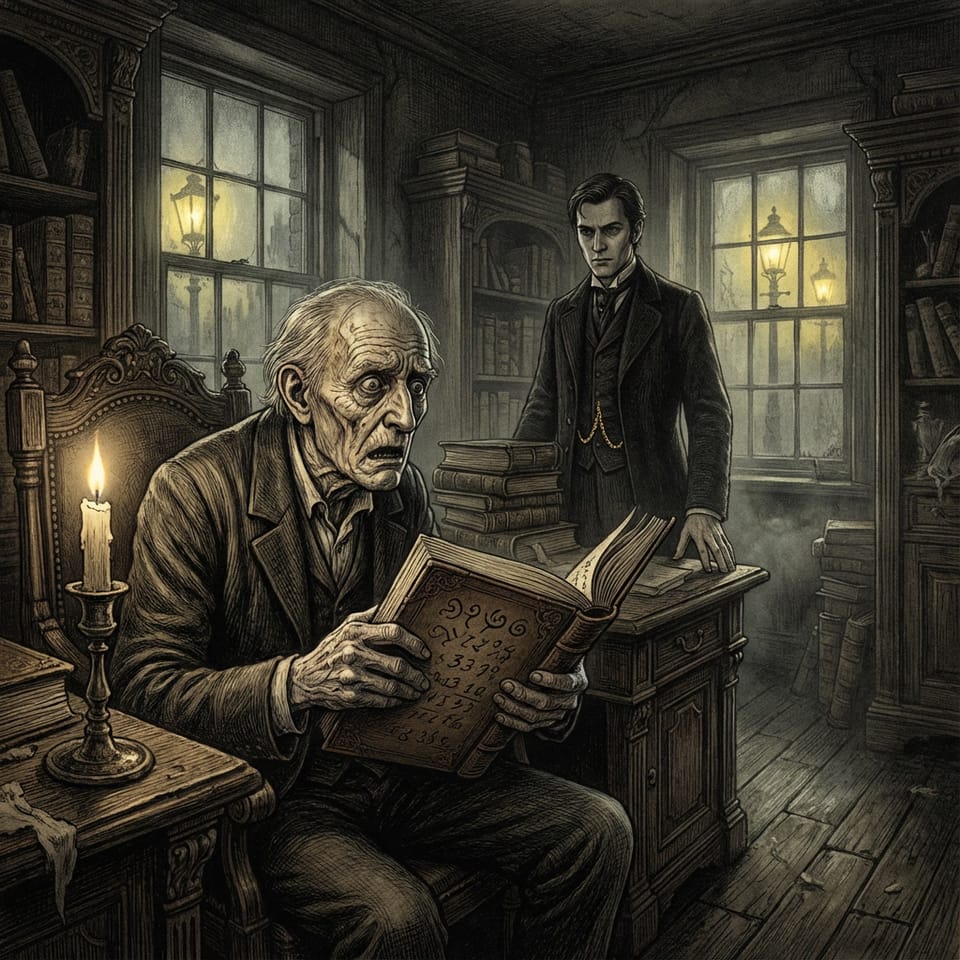
It was on a damp November morning, when the fog crept down from the river and pressed itself against the office windows, that Scrooge asked to see the books. A small request, nothing more. He had not kept as close an eye on figures these last years; he had trusted Bob, as one trusts a son. But something in the air, or perhaps in Bob's quick hesitation, made him insist.
The ledgers arrived with the smell of new ink and the crisp crackle of fresh binding. Scrooge opened them with a miser's old instinct, fingers remembering their purpose before his mind could intervene. At first, the columns sang their familiar song. But then a note soured. A figure sat where it should not. An inconsistency, small as a single wrong stitch in a shroud.
He told himself it was error. Even the best men falter. Yet the further he turned the pages, the more the wrongness multiplied, breeding in the margins like something foul. Columns that should have marched straight now bent and writhed. Balances that once stood firm had been hollowed from within. And everywhere, everywhere, the ghost of money that had vanished into names he did not know, accounts that led nowhere, sums swallowed by silence.
The candle at his desk guttered. He did not notice. His breath came shallow. The numbers accused him from every page, and he could not look away.
When Bob returned, he did not shuffle or wring his hands as the clerk of old. He stood tall, coat finely cut, a gold chain gleaming across his waistcoat. His smile was steady: not the trembling grin of a man grateful for warmth, but the calm expression of one who knows the fire is his.
"Bob," Scrooge said, voice rasping with age and fury, "explain this deficit."
Cratchit glanced at the open ledgers, then at Scrooge's trembling hands. His answer came soft, but not humble.
"Mr. Scrooge," he said, "you made me partner. You signed every instrument. You pressed the gift into my hands, sir. I did but receive it."
He laid one hand on the ledger as though closing the lid of a coffin.
Scrooge's mouth worked, but no words came. He thought of Tiny Tim, of the night by the fire when he vowed never to let the boy want again. He thought of the Christmas dinners, the laughter, the toasts. He thought of his own heart, cracked open by spirits who promised him peace. And he saw, standing before him, the harvest of that mercy: a man fattened on his generosity, who now stood over him as master.
"Everything," Scrooge whispered. "You've taken everything."
Bob did not flinch. "No, sir. You gave it. And London applauds you for it still."
The words hung in the air between them.
There was nothing more to say.
The rest of the day passed in silence. Bob wrote at his desk, the scratch of his pen filling the room. Scrooge sat stiffly in his chair, the ledger open before him like an accusation. Outside, carriages rattled by, carrying men who had kept what was theirs. Men who still owned their homes, their fortunes, their names.
By evening, the candles guttered low. Bob gathered his papers and left with the calm dignity of ownership. Scrooge remained, alone in the office that had once been his kingdom. The fog pressed at the windows, the gaslamps outside throwing long, watery shadows across the floor.
He whispered to himself, the words a prayer, a curse, or perhaps only the mutterings of a man who had given everything and received nothing in return.
"They said I was saved."
The fog pressed closer. The shadows did not move. And no voice, living or spectral, offered reply.