Nobody Reads Provenance
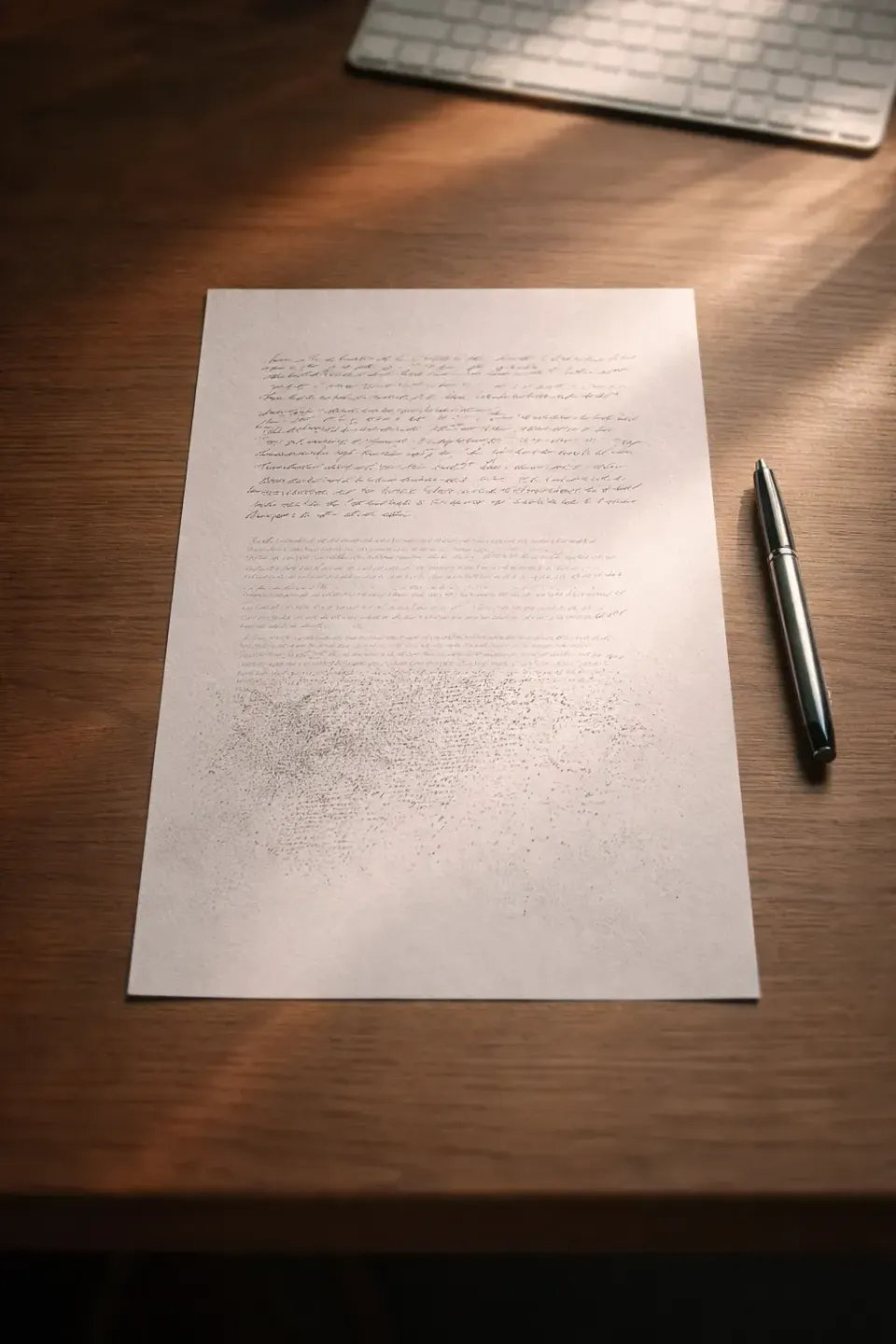
"Was this written by a human?" is a substitute question, asked when people don't know how to judge what they're reading anymore.
No reader feels moved by a sentence because of its origin story.
They linger because something in it recognized them.
Resonance has never been about authorship. It has always been about alignment.
"This looks like a human wrote it" is not praise. It's an admission that nothing else can be said.
Most writing fails long before AI enters the room because nothing is at stake except filling space.
Humanizing tools promise safety. They pad sentences with warmth. What comes out is the literary equivalent of a firm handshake and a blank smile. Readable, pleasant, gone before you reach the next paragraph.
The real divide is not human versus machine. It's writing that tries to be seen versus writing that tries to say something.
When everything is text, origin is not a filter. Recognition is. And recognition has never cared about the source.
-no-one
Thoughts you didn’t think, written for you anyway
Related essays:
Ink and Code Part 1: The New Literary Puritans
The gatekeepers obsessed with a question this essay says nobody asks.
Ink and Code Part 2: The Morality of Tools
The philosophical version of the same dismissal: tools don't define value, sources don't define resonance.
The Mirror That Thinks Back: How AI Reflects the Human Creative Mind
The lyrical version: people remember how a piece made them feel, not how it was made.
The Accidental Cop
The applied case: where the question this essay dismisses gets enforced anyway.