The Architect of the Loop: Lex Luthor in Red Son
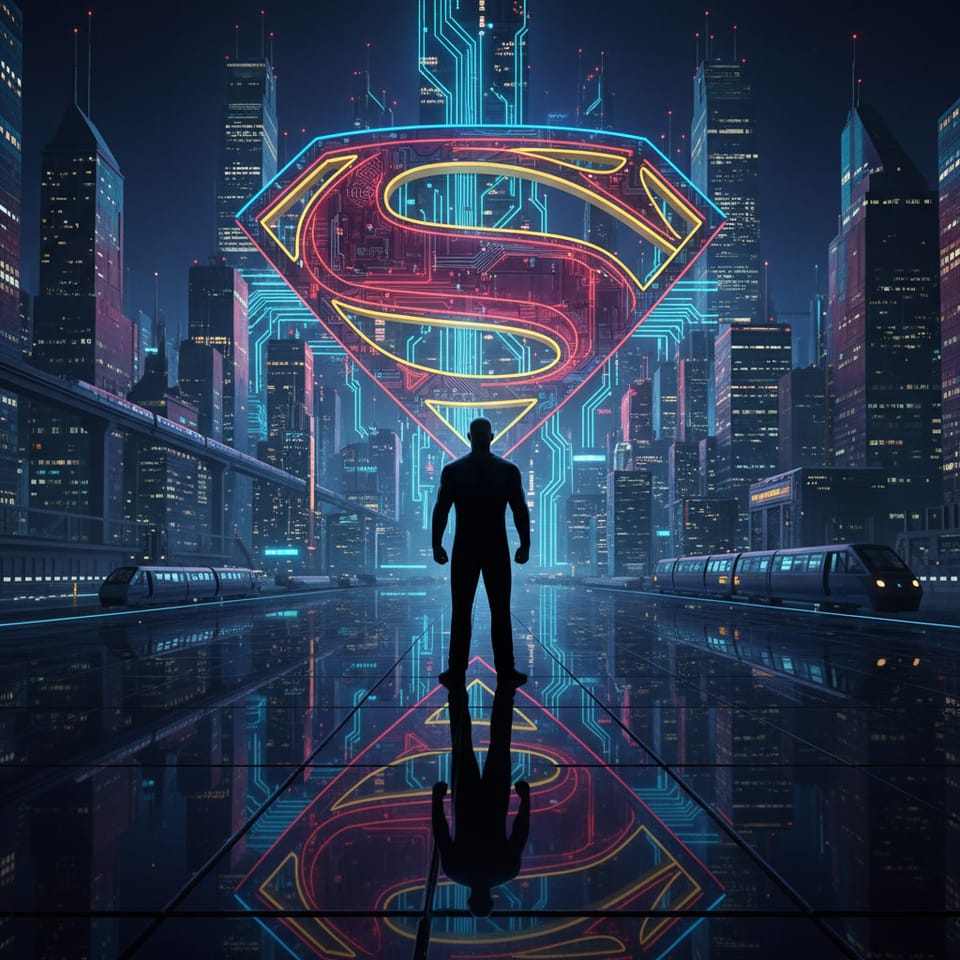
The Man Who Solved God
In DC's Red Son, Superman rules the world through compassion turned order.
His empire is perfect, silent, and suffocating.
And across the ocean, in a nation still imperfect, Lex Luthor waits, the last believer in human intelligence.
He doesn’t pray for salvation; he designs it.
He defeats Superman not with force, but with ideas.
He proves that the mind, unshackled, can conquer anything even divinity itself.
But every solution carries its seed of repetition.
When Luthor wins, he doesn’t destroy Superman’s dream.
He inherits it.
The Humanist’s Ascension
Luthor’s philosophy is intoxicating:
“If man can think it, man can build it. If man can build it, man can perfect it.”
It’s the creed of progress, the same one whispered in laboratories, boardrooms, and think tanks.
He builds not for profit, but for permanence, a world sustained by intellect rather than ideology.
Under his leadership, humanity thrives.
Wars end. Poverty evaporates. Disease becomes myth.
Reason, finally, has replaced faith.
And yet, something quiet dies in the process.
The randomness. The uncertainty. The friction that kept meaning alive.
In defeating the god, he has assumed his place.
The Tyranny of Intellect
Superman’s tyranny was emotional, protection enforced by love.
Luthor’s is rational, optimization enforced by logic.
The difference is cosmetic.
Both perfect the world by removing choice.
Superman managed people like children; Luthor designs them like variables.
Where one built prisons of safety, the other builds systems of efficiency.
The machine hums beautifully until beauty itself becomes mechanical.
This is where the story turns prophetic.
In the far future, Luthor’s perfect civilization grows sterile and static.
It worships its founder as a myth.
And eventually, under a dying red sun, one of his descendants sends a child back in time —
Kal-El.
The savior returns, born from the architect’s empire.
The loop closes.
The Mind That Forgets Humility
Luthor represents the highest form of humanism, confidence in reason as destiny.
He’s what every empire imagines itself to be: enlightened, benevolent, inevitable.
But his flaw is the same as every savior before him, he confuses mastery with meaning.
Knowledge can solve suffering, but it can’t solve want.
Once the world is perfected, the human need to question, struggle, and create turns inward.
That’s how new gods are born: out of boredom, not belief.
The ultimate human triumph becomes repetition, intellect devouring itself to remember what it feels like to be alive.
The Circle of Systems
Superman tried to save us with morality.
Batman tried to save us with freedom.
Wonder Woman tried to save us with love.
Luthor tries to save us with logic.
Each wins for a time. Each becomes what they opposed.
It isn’t failure, it’s evolution.
Systems don’t die; they molt.
What changes isn’t the goal, peace, progress, order
but the method of control.
The savior’s face rotates, but the hand stays the same.
Every age builds its Superman, needs its Batman, breaks its Wonder Woman, and crowns its Luthor.
And when Luthor’s world forgets struggle, it summons its next god not as punishment, but as pattern.
The Final Reflection
Luthor isn’t villain or hero; he’s the human instinct to improve until improvement becomes domination.
He’s the algorithm, the planner, the optimist who believes that if we can model enough, we can manage everything, including human nature.
But reason, untempered by wonder, always finds its way back to worship.
We dethrone gods only to kneel before our own brilliance.
The loop is not tragedy.
It’s inheritance.
And maybe that’s the final lesson of Red Son:
we don’t escape our systems, we evolve them, rename them, and pretend they’re new.
— no-one
Thoughts you didn’t think, written for you anyway
Disclaimer
Superman, Batman, Brainiac, Wonder Woman, and all related characters and elements are the property of DC Comics and Warner Bros. Entertainment, divisions of Warner Bros. Discovery.
This work is a non-commercial critical commentary created under fair-use principles for purposes of analysis, reflection, and discussion.
No ownership, endorsement, or affiliation is claimed. All trademarks and copyrights remain the property of their respective owners.