The Awakening That Won't Arrive
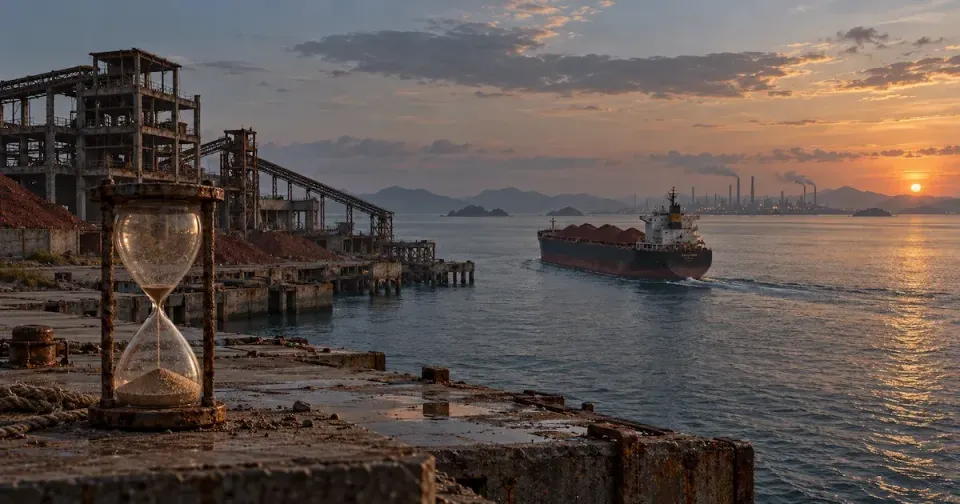
A confident story is circulating about the Philippines. It holds two superpowers hostage, and it just hasn't noticed yet. The country supplies the nickel that feeds Chinese factories, so Beijing cannot afford to punish it. It sits on the geography that American strategy in the South China Sea depends on, so Washington cannot afford to lose it. Both giants need the archipelago more than the archipelago needs either of them. The assets are already in place. The only missing ingredient, the story goes, is a collective national awakening, the courage to pick up these chips and bet them.
Most of the factual premises hold. The Philippines is the world's largest exporter of nickel ore and the second-largest producer of the metal on earth. Its location anchors any serious effort to project force into contested waters. The money confirms the stakes, with Washington funding base upgrades and industrial corridors while Beijing weighs sanctions it keeps postponing. The leverage is real.
The conclusion drawn from it is a fantasy, and the reason is the same one that explains why the country stays poor while sitting on a fortune.
The story assumes a player called "Manila" that could gather this leverage and wield it as a single coherent hand. That player exists only on paper. In its place stands an arrangement of families, each holding a piece of the state, each loyal to its own network before any notion of a nation. A country can possess enormous leverage and spend none of it, because leverage is exercised by a state, and this state was captured long ago and kept deliberately weak by the people who captured it. The nickel belongs to the nation the way a mansion belongs to the caretaker who holds its keys. He opens the gate for paying visitors and pockets what they hand him at the door. The house itself was never his to sell.
Who Actually Holds the Nickel
The mineral wealth sits in specific hands, and those hands are the dynasts'. Under the Local Government Code, governors and local officials issue extraction permits within their jurisdictions. The authority to grant or deny mining is devolved directly to the families who already run the provinces. A permit becomes one more favor to dispense, priced in loyalty.
The cases are on the record. A Pangasinan governor was charged with graft for issuing permits to unqualified firms. A Surigao congressman allegedly strong-armed mining companies into signing over shares of their concessions. Mining company presidents turn out to be the children of sitting representatives. A sitting senator described the arrangement plainly in a 2022 interview, naming the patronage system in which people with connections and money come first, then saying in the next breath that he would accept political donations from miners. The capture and the participation arrived in consecutive sentences.
So the premise that "Manila commands its mineral wealth" assumes a coherence the system is built to prevent. A disciplined export-restriction strategy against China would require dozens of clans to subordinate immediate rents to a collective national gambit, holding a line together while each of them absorbs the cost. The structure selects against exactly that. Every actor moves first toward the deal that feeds their own network, and the line never forms.
The Processing Fantasy
The sharper proposal is to stop shipping raw ore and process it at home, capturing the high-value step instead of handing it to China. This is where the trap closes hardest, because domestic processing demands the one capacity the system is engineered to withhold: sustained industrial policy, insulated from the election cycle and the pork imperative, held steady across a decade or more.
Indonesia ran this exact play. It banned raw nickel ore exports in 2014, forced investment into domestic smelting, and climbed the value chain into batteries and stainless steel. The Philippines proposed the same ban, then reversed it. Same resource, same opportunity, neighboring geography, opposite outcome. The state that could discipline its own extraction did the hard thing. The state that was captured and hollowed could not hold the policy long enough to matter.
The clock makes the failure concrete. At current extraction rates the Philippines has roughly fifteen years of nickel reserves left, against a world average near forty and Indonesia's twenty-five. The leverage everyone is urging the country to seize is a depleting asset on a short timer. The window to convert raw dirt into an industrial base is closing while the permits keep flowing to whoever can pay for them, and the ore keeps leaving as ore.
The Giants Aren't Hostages. They're Patrons.
Here the triumphant story inverts. Great-power bidding does not force the system into coherence. It feeds it. Billions in base upgrades, corridor investment, and mineral financing arrive as a new stream of rents, flowing to whoever controls access to the bases and the permits.
The superpowers aren't being held hostage. They are paying tribute into a machine that will metabolize their money the way it absorbed jueteng profits, pork barrel allocations, and ill-gotten wealth before it. Foreign capital becomes the newest hacienda. The patron changes from a Manila congressman to Washington or Beijing, and the logic of patronage governs exactly as before. A port deepened with allied money enriches the family that controls the land it sits on. A corridor routed through a province rewards the clan that signs off on the right-of-way.
Why This Looks Like Strength
The money is real, the construction is real, and some of it genuinely reaches the country. Roads get built. Ports get deeper. Jobs appear around the new facilities. None of that is illusion, and the piece would be dishonest to pretend otherwise.
The distinction that matters is between tribute captured and capacity built. A facility that enriches the clan controlling its land is not national development. It is the old machine running on richer fuel. Capacity would mean a state that could tax the facility, regulate it, and redirect its returns toward the next thing the country needs. What exists instead is an arrangement that converts each new inflow into private advantage and calls the resulting construction progress.
The Caretaker Who Owns Nothing
Picture the man who keeps the grand house. He holds every key. He opens the gates for the guests who come to admire the place, and he pockets what they press into his hand on the way in. Some days the tips are generous enough that he mistakes them for a share of the estate. The guests arrive, the guests depart, and now and then the house changes owners entirely, the deal struck in rooms he is not invited into. He sleeps in the servants' quarters through all of it, counting his tips, certain the mansion is his because he is the one who unlocks the door.
The leverage is genuine. The nickel will fuel someone's factories and the geography will anchor someone's fleet, and money will keep arriving to secure both. What the triumphant story misreads is the awakening it waits for. The country's worth was never hidden. Everyone can see the house. What is missing is a state able to spend that worth on the nation rather than route it to the families who hold the keys, and that absence was not an oversight. It was built, carefully, by the people it serves.
— no-one
Thoughts you didn't think, written for you anyway
Related essays:
The Unbreakable Structure
The architecture, named. What the nickel essay shows in one industry, this one draws as the blueprint.
Beautiful Principles, No Oil
The same captured state, metered at the pump. Policy that cannot survive the back room it does not have.
Sources
- Philippines as largest nickel ore exporter and second-largest producer: US International Trade Administration; Mysteel Global
- Reserve life (~15 years against world average ~38 and Indonesia ~25): IntelliNews
- Nickel ore as over 70% of Philippine dry-bulk exports: American Journal of Transportation
- Indonesia's 2014 raw ore export ban and downstreaming push: IEA Policy Database; US International Trade Commission
- Local Government Code permit authority and contradictions with national MPSA approval: Philippine Institute for Development Studies
- Permits as patronage; mining operators tied to families of local officials: Philippine Center for Investigative Journalism
- Pangasinan governor charged with graft over mining permits: Philippine Daily Inquirer
- Senator on the patronage system while accepting miner donations: ABS-CBN News
- Local officials financing and fronting mining operations: Gulf News