The Capitalist in Leninburg: Could a Mamdani Rise in a Socialist State?
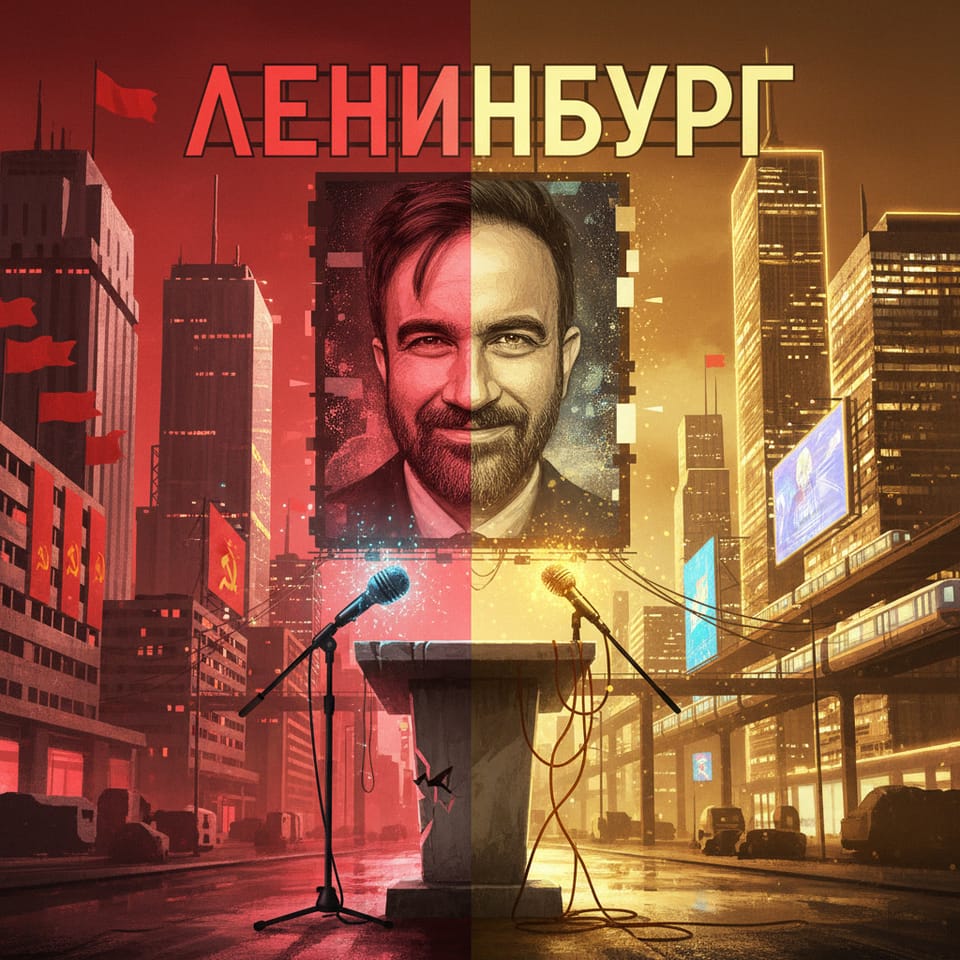
The Silence Between Praise and Panic
Every age has its heroes and villains, its saviors and saboteurs.
Supporters cheer. Opponents panic.
But in the noise of praise and dread, few ever stop to ask the quieter questions:
Could a figure like this even exist without the system already failing?
What kind of structure allows reformers to rise without burning the house down?
And why do we keep mistaking charisma for change?
Those questions matter, because they reveal the limits of every ideology: capitalist or socialist alike.
In capitalism, the rebel is monetized.
In socialism, he is neutralized.
Either way, the system protects itself.
So let’s flip the script.
Imagine a mature socialist state, Soviet-style, with state ownership, central planning, and Party dominance.
Now imagine a Mamdani-like figure: privileged background, polished rhetoric, vowing capitalist “relief.”
Could such a person ever win a major city?
Almost certainly not.
But understanding why shows what power really defends.
Wealthy Roots: Even More of a Red Flag
In capitalism, privilege gives rebels a platform.
In socialism, it paints a target.
A reformer born into comfort would be branded “bourgeois,” an ideological contaminant.
The Bolsheviks liquidated aristocrats and distrusted even moderate socialists.
Figures like Alexander Kerensky tried reform and were erased by revolution; dissidents like Andrei Sakharov whispered from exile, not podiums.
Our imagined Mamdani might be eloquent and idealistic, but under one-party rule, those traits invite surveillance, not ballots.
Rhetoric Becomes Heresy
Attacking a socialist “Trump”, a Brezhnev-style bureaucrat drowning in privilege, might sound radical, especially if paired with capitalist promises of entrepreneurship and prosperity.
But in a true socialist regime, criticism of leadership equals criticism of the revolution itself.
There is no “loyal opposition,” only “enemies of the people.”
Even reform-minded insiders like Gorbachev framed their changes as purification, not rebellion.
An outsider promising markets and individual wealth would be branded a foreign agent long before reaching the masses.
The Media Is Not Yours to Hack
Capitalist media rewards disruption: the viral post, the outsider narrative.
Socialist media exists to prevent it.
State newspapers, factory loudspeakers, and radio programs are instruments of control, not arenas of debate.
There are no algorithms to game, no ad buys to deploy, only party approval.
Historically, dissent moved through contraband leaflets or foreign radio waves.
In that world, our capitalist crusader’s manifesto would travel by whisper, not campaign rally.
The Only Chance: Collapse or Transition
Could it ever happen?
Only in moments when ideology itself is cracking during famine, stagnation, or collapse.
Deng Xiaoping and Václav Havel rose not as capitalists storming the gates, but as insiders or intellectuals catching the tide of decay.
Our imagined Mamdani might appear during a velvet revolution, not a stable regime.
In a functioning “Leninburg,” he’d remain legend, not mayor but a myth told in the barracks, not sworn into office.
The Human Constant
Every system eventually breeds exhaustion.
The slogans fade, the plans stall, and ordinary people start looking for relief — any relief.
The hunger for change is universal; only the currency of hope differs.
Under capitalism, desperation sells as choice.
Reform becomes a product: “Buy this vision, fund this movement, invest in this disruption.”
Outrage is a subscription model; rebellion becomes branding.
The system survives by monetizing despair, a kind of soft control that rewards expression without consequence.
Under socialism, desperation sanctifies itself as redemption.
The reformer becomes prophet, preaching the return to “true principles.”
But when the state owns both factory and narrative, redemption demands obedience.
The system survives by converting disappointment into loyalty often at the cost of those who question it.
The people are the same in both stories: weary, hopeful, and ready to believe again.
But the consequences diverge.
In capitalism, failed promises create disillusioned consumers.
In socialism, they create dangerous believers.
Both are tragedies but only one can change the channel when the illusion fades.
The Mirror
Capitalism, for all its chaos, commodifies critique.
It lets socialism trend online.
Socialism, by contrast, cannot risk reciprocity; its legitimacy depends on silencing the counter-narrative.
So perhaps ideological pluralism, the freedom to attack the system from within, is not a universal virtue but a luxury of capitalism.
That irony should make both sides uneasy: every system claims to liberate the human spirit, yet each builds its own walls around who gets to question it.