The Eternal Count and the Seven Rooms You Leave Behind
There is a number that never loses a digit. Multiply 142857 by anything from 1 to 6, and the same six figures rearrange themselves into a new sequence. The pieces simply move to different positions, and the number carries on, looking changed but weighing exactly the same.
The Phoenix number.
You think about this when you stand in the hallway of a house that used to be loud.
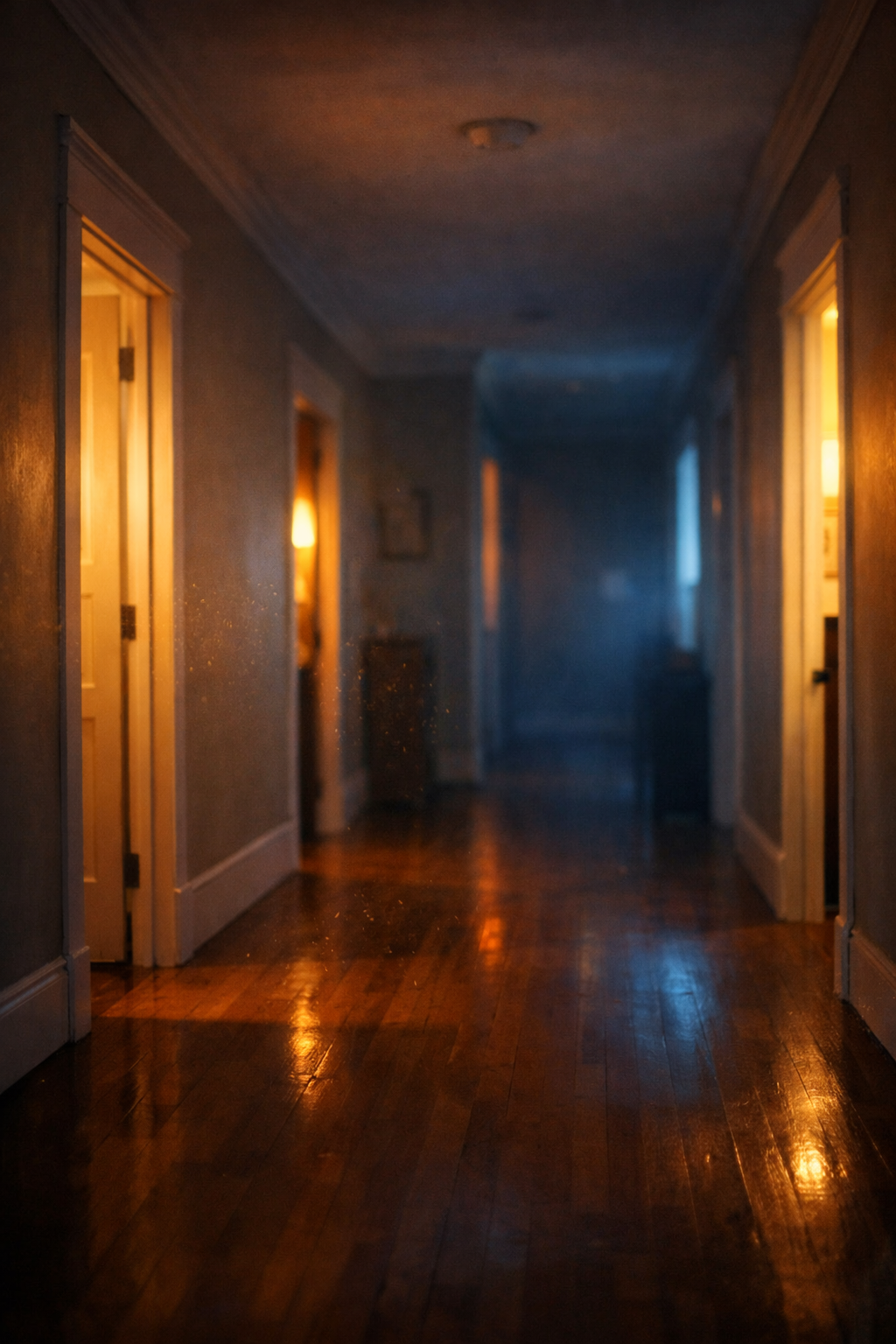
The rooms are all still here. The walls, the doors, the light switches your hand finds in the dark. But everything has rearranged, and the new configuration is so quiet that some nights you walk from room to room, just to hear the floor creak. To remember the sounds of a full house.
The First Room: Arrival (142857 × 1)
The original configuration. All six digits in their starting positions. You are somewhere in your twenties or thirties, and a nurse places a weight in your arms measured in pounds and ounces that somehow outweighs everything you have ever held. The math changes instantly and permanently. You were one kind of person walking into that room and now a different one walking out. The number begins here. Driving home at fifteen miles an hour with your hazards on, every car on the road becomes a threat. You carry the car seat into the house with both hands, set it down on the living room floor and stand over it, watching breath move a chest no bigger than your palm, thinking:
I will never sleep again and I do not care.
The Second Room: The Doubling (142857 × 2 = 285714)
Everything multiplies. The noise doubles, then triples. Sippy cups reproduce in the dish rack like they're running their own civilization. The laundry becomes geological, stratified layers of tiny socks and stained onesies, washed and folded and washed again in a cycle so constant it develops its own weather system. Your back hurts in a new place every month, rotating through the spine like a touring company. You learn to cut grapes lengthwise with the speed and precision of a surgical resident, to read the exact moment a tantrum will detonate by the pitch of the inhale that precedes it, the way old sailors read storms by the color of the water.
The digits have rearranged. You are the same person carrying the same six numbers, but every one of them faces toward someone smaller now.
The Third Room: The Golden Afternoon (142857 × 3 = 428571)
This is the room you will spend the rest of your life trying to get back to.
They are somewhere between six and twelve, ages that will later compress into a single golden blur. Saturday mornings last forty hours. A cardboard box becomes a spaceship, a castle, a veterinary clinic for stuffed animals with devastating injuries. Saturday afternoons mean diners and toy stores, and the quiet pleasure of seeing everything through eyes that still find it astonishing. You read the same book fourteen nights running, performing every voice, the villain's growing more elaborate each time because they laugh at it, a sound that only exists for this window of years. You do not know the window is a window. You think it is a room. You think you live here.
You do not live here. You are passing through, and the door behind you is already closing with a slowness so gentle you will not hear the click for a decade.
The Fourth Room: The Negotiation (142857 × 4 = 571428)
Early teens. Spare parts that don't fit yet: legs too long for the torso, emotions too big for the vocabulary, a need for independence wired directly to a terror of being alone. Bedroom doors close. Conversations compress into syllables. "How was school?" "Fine." On the other side of that door, music plays at a volume calibrated to communicate that the world inside is no longer shared. It's taken so personally that it rearranges something in the chest, and then there's the dishwasher to unload, each plate set down with a precision that suggests the plates have done something wrong.
Your digits have shifted again. 571428. Still the same six numbers, still whole, but aware now that the sequence isn't building toward a destination. It is rotating. And rotations always come back to where they started, which means what you are rotating toward is an empty room.
The Fifth Room: The Driving (142857 × 5 = 714285)
They can drive now. This is presented as a milestone but nobody tells you what the milestone actually marks. The driveway becomes a departure gate. There are arguments that don't fully resolve, just run out of energy and go quiet. Friends you have never met whose names appear in conversations like they've always been there. Nights where you lie awake watching the clock move toward an hour they promised they'd be home by. The things they are experimenting with that you also experimented with, which is exactly what makes it terrifying.
The Sixth Room: The Boxes (142857 × 6 = 857142)
Move-in day. Boxes up three flights of stairs, a dorm room, a first apartment, whatever form the leaving takes. It smells like fresh paint and someone else's future. You assemble a bookshelf with an Allen wrench and pretend it requires full concentration so there is something to look at that is not your child standing in a room where you do not live. You check the locks twice. Mention the fire extinguisher. Say "call if you need anything" with a casualness you have been practicing for months.
The drive home is quiet. The house feels like a cathedral after the congregation has gone. You stand in the hallway. The floor creaks. Nobody answers.
857142. Every digit has occupied every position. You have been every version of this parent. The sequence is complete.
The Seventh Room: The Mirror (142857 × 7 = 999999)
And then comes the multiplication that changes the math.
It happens in a mirror, a car window, a shop front at the wrong angle. The face looking back is your father's. Your mother's. You grunt when you sit down. A sound you once mocked in older people.
142857 × 7 = 999999.
The digits collapse into uniform nines, and what the nines mean is this: you are now the age your parents were when you thought they were old. The house where you are raising your children has become the house where you raised them. Past tense. The verb has moved and it is not coming back.
The days come and go. You have the kind of time that people who don't have it fantasize about. You would trade every second of it for one more Saturday morning with a cardboard spaceship and a villain voice that makes them laugh so hard they can't breathe.
The Number That Comes After
But the Phoenix Number does not end at 999999. It never does.
The doorbell rings on an ordinary afternoon. Your daughter and her husband are standing there with a gift you weren't expecting. You open it without knowing what it means yet. And then you do. Two words, or a onesie, or a picture, and the digits rearrange one final, impossible time.
And the six numbers rise. 1. 4. 2. 8. 5. 7. Not in you this time, but through you, transmitted forward into a sequence you will witness but not walk. The cycle is not yours anymore. It belongs to the person you carried out of that hospital at fifteen miles an hour with your hazards on, who is now driving the same speed, hands gripping the wheel the same way.
You will stand in a different hallway soon. And at some point, when the room has settled, someone will pass the baby to you. A weight measured in pounds and ounces. You will know exactly how to hold it, because you have held this before. The head will fit in your palm the same way. The chest will rise and fall with the same impossible fragility.
And standing there, you will recognize the feeling, the one from a room you stood in decades ago, holding something just this small:
I will never sleep again and I do not care.