The Fatigue Machine: How Modern Life Makes Us Easy to Gaslight
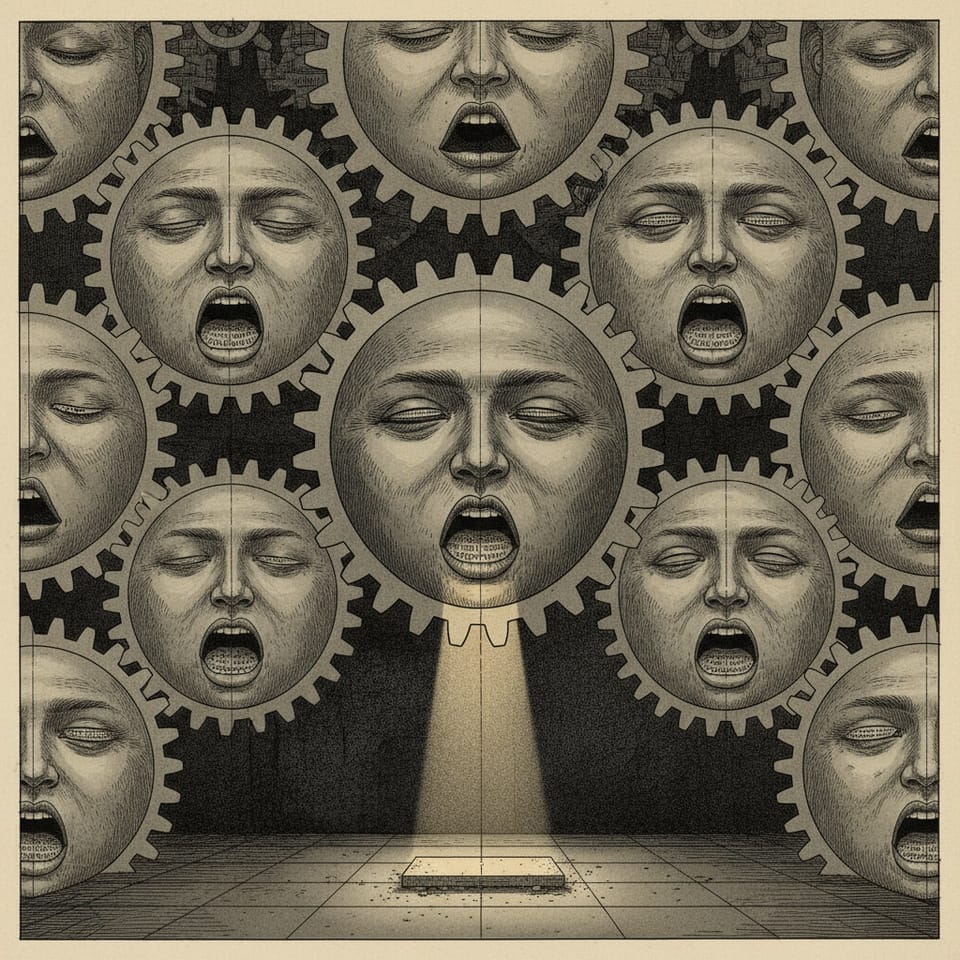
The Quiet Exhaustion Beneath Certainty
Most of us aren't gullible. We're just trying to make it through the day. And that opens us up to deception. Not from carelessness, but from exhaustion.
The outrage carousel never stops. Who's spinning, who's bluffing, what's real. The information age promised empowerment. Instead, it handed every citizen a newsroom without the staff, the training, or the time.
What emerged wasn't a smarter public. It was a depleted one.
The New Shape of Gaslighting
Gaslighting used to be personal. One manipulator, one victim, one fog of confusion. Now it's ambient. Algorithmic. A million small signals nudging your sense of reality a few millimeters at a time.
Every feed whispers the same reassurance: You're the rational one. Your side cares about truth. The other side is crazy. Repeated enough, we stop questioning the source.
Modern gaslighting doesn't need to lie. It only needs to simplify. When complexity feels unbearable, simplicity feels like honesty. So we mistake the easy explanation for the true one.
The Poverty of Time
Democracy now demands critical thinking at industrial scale, yet most people are working two jobs, caring for families, trying to stay afloat. Rather than acknowledging this reality, the system blames them for being "uninformed" when circumstances are crueler: they simply don't have the bandwidth to defend themselves from professional manipulators.
Headlines replace articles. Threads replace investigations. Influencers replace reporters.
Gaslighting succeeds because it's efficient. It fits inside the cracks of daily exhaustion.
The Business of Certainty
Outrage is profitable. Doubt isn't. So platforms learn to feed us the emotions that keep us scrolling. A post that makes you pause and think is worth nothing. A post that makes you feel morally right is gold.
That's the trap. We feel informed precisely when we're being shaped. What we believe matters less to the system than how strongly we believe it.
The Complicity We Don't Name
But here's the part we don't like to admit: the system only works because we let it.
That's not foolishness. It's human nature. Being right feels better than being uncertain. Tribal belonging soothes better than lonely skepticism. The dopamine hit of shared outrage is real, fast and free.
We're not just victims of the fatigue machine. We're its willing customers, buying the simplified story because the complicated one costs attention we don't have.
Sharing without reading. Nodding along because the tone feels righteous. Choosing comfort over inconvenient fact. At some point, that stops being gaslighting. It becomes participation.
The weariness is genuine. The manipulation is constant. And the thrill of certainty is the bait.
Our intelligence isn't the shield we think it is. Our hunger for clarity is the opening.
What's Left When Certainty Fails
There's no clean exit from this. No app to delete, no habit to build, no five-step plan that inoculates us from a system designed to overwhelm.
But refusal doesn't have to be total to matter.
Pausing before sharing the too-perfect outrage. Saying "I don't actually know" instead of defending a five-minute-old opinion. Keeping one source that challenges us, even when we'd rather not read it.
These aren't solutions. They're barely gestures. But gestures are what remain when systems are too large to fight and too entwined to escape.
The truth, what little we can still grasp, lives in the friction between exhaustion and complicity.
Not in perfect discernment. Not in heroic resistance. But in the small, stubborn refusal to let fatigue make every decision for us.
The Uneasy Ending
We want to believe awareness is enough. That once we see the machine, we can step outside it.
But you're reading this on a screen that's already learning what you'll click next. The essay itself is shaped by the same incentives it critiques, optimized for shares, condensed for skimming, performing insight while you perform attention.
Maybe that's the point. There's no outside anymore. No pure position from which to judge.
What's left isn't hope, exactly. It's something smaller and more stubborn: the recognition that even inside the machine, there are still moments, brief, hard-won where we can choose to look a little longer.
Where attention hasn't quite been sold and the easy lie hasn't yet replaced the complicated truth.
The machine runs on our automatic surrender. So the only thing left to withhold is the automation itself.
Not always. Not perfectly. But enough times that the gears catch, just slightly, on something still human.