The Unbreakable Structure
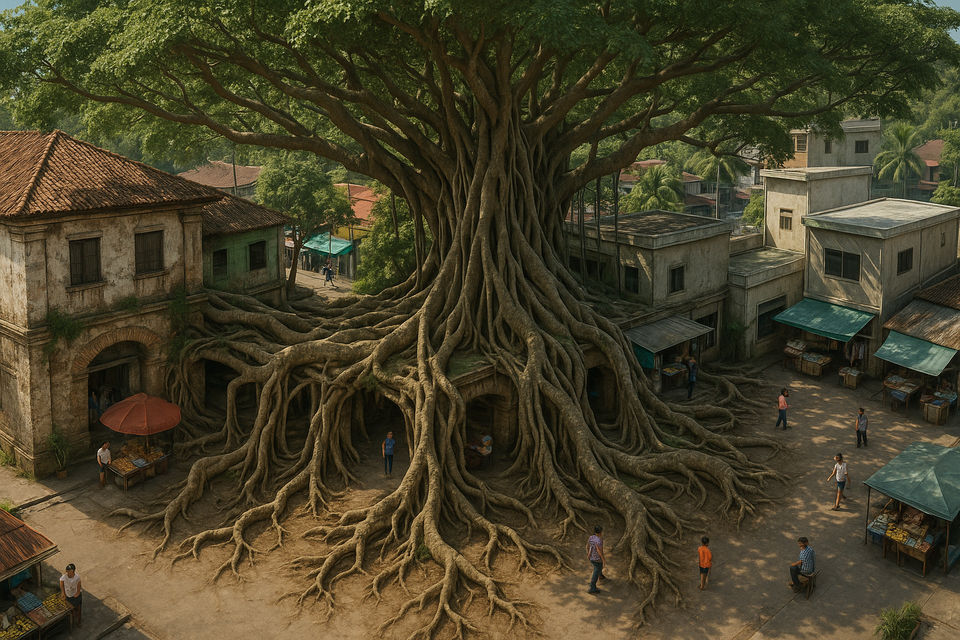
Philippine political dynasties persist because the system fulfills essential functions that no proposed alternative can replicate, not because reform efforts have been insufficient. Over 80% of elected officials come from political families, a figure unchanged across decades. When Ferdinand Marcos Jr. won the 2022 presidency with 58.8% of votes despite his father's documented theft of $5-10 billion and responsibility for thousands of deaths, this wasn't democratic failure. It was the system operating as designed: family networks providing stability, resources, and identity that formal institutions cannot deliver.
The 1987 Constitution mandated creation of an Anti-Political Dynasty Bill. Nearly forty years later, it remains stalled because legislators from dynastic families won't vote against their interests. Post-EDSA reforms promised transformation but produced reconfiguration instead. The same families that dominated under Marcos Sr. returned through technically free elections that operated within patronage structures making genuine alternatives impossible.
This permanence reflects not political dysfunction but social architecture. In a nation of 7,641 islands with limited infrastructure, weak formal institutions, and multi-year average 19% poverty rates, dynastic networks provide what government cannot: jobs, services, and survival mechanisms. The question isn't whether this system should exist but why alternatives have never gained traction despite repeated attempts at reform.
Patronage as Infrastructure
Political families control access to resources through systematic distribution. Local government jobs, infrastructure contracts, business permits, and disaster relief flow through dynastic gatekeepers. This creates constituencies whose economic survival depends on incumbent victory. Voting against the dynasty means risking livelihood, not expressing political preference.
Studies estimate 20-30% of voters receive direct payments during elections, though actual participation likely exceeds reported figures due to social desirability bias. Research on clientelism indicates that a significant share of citizens access government services or employment through political connections. These aren’t deviations from the democratic process but the mechanism through which resources circulate in the absence of reliable formal systems.
Cultural concepts reinforce this structure. Utang na loob (debt of gratitude) transforms political transactions into moral obligations. A mayor who provides school supplies or medical assistance creates bonds that transcend single election cycles. Voters supporting dynasties aren't buying into false consciousness but acknowledging which systems actually deliver tangible benefits to their families.
Dynastic Alliance Mechanisms
Political families consolidate power through two distinct but complementary strategies. First, intermarriage between elite clans creates kinship networks that span regions and pool resources. These marriage alliances have historical precedent dating to Spanish colonial principalia families and continue in contemporary politics, binding families through blood ties that make betrayal costly and cooperation natural.
Second, electoral alliances between separate dynastic families create temporary partnerships that combine regional power bases. The 2022 presidential election demonstrated this when Sara Duterte, daughter of former president Rodrigo Duterte, ran as vice president on Bongbong Marcos Jr.'s ticket. This political partnership, not a marriage alliance, combined the Marcos stronghold in northern Luzon with the Duterte base in Mindanao. The arrangement functioned like a corporate merger, pooling campaign resources and voter bases while eliminating competition between two powerful families.
Both mechanisms make it nearly impossible for outsiders without similar networks to mount viable campaigns even if they secure funding. The consolidated structures control not just votes but the entire infrastructure through which political power operates.
Why Alternatives Cannot Scale
Reform movements consistently fail not from inadequate mobilization but from inability to replicate what dynasties provide. An anti-corruption candidate might promise meritocratic governance, but cannot immediately replace the jobs, contracts, and services that constituents receive through existing patronage. The reform represents abstract future benefit against concrete present loss.
Digital platforms were supposed to democratize information and enable grassroots organizing. Instead, TikTok became a vehicle for revisionist narratives rehabilitating the Marcos dictatorship as a "golden age." Dynasties adapted faster than reformers could mobilize. They employed the same technologies that theoretically threatened them, using superior resources to dominate new media spaces.
Economic development promised to create middle classes demanding meritocratic governance. Growth instead enriched existing elites while poverty rates stagnated. Educated Filipinos who might challenge the system emigrate as Overseas Filipino Workers, comprising 10% of the population and sending remittances worth 10% of GDP. This simultaneously provides escape valve for individual ambition and removes potential change agents from domestic politics.
Community organizations like cooperatives and savings groups create alternative support networks, but these operate at margins too small to replace dynastic infrastructure. They provide dignity and agency for participants while leaving the broader system untouched. Violence and intimidation, exemplified by the 2009 Maguindanao massacre killing 58 people including 32 journalists, establish boundaries that challengers must consider even when most dynasties employ subtler methods.
The Accommodation Imperative
Most Filipinos exist on a spectrum between principle and pragmatic accommodation, shifting based on circumstances and stakes. The same person refusing to sell their vote might seek government employment through political connections because formal hiring processes prove inaccessible. A business owner maintaining ethical practices still pays fixers to expedite permits when bureaucratic delays threaten bankruptcy.
These aren't moral failures but forced participation in systems offering no viable alternatives. When formal institutions cannot reliably provide what people need to survive, patronage networks fill the gap. The cultural embedding runs deep enough that removing dynastic structures without replacement infrastructure would likely produce chaos rather than democracy.
The works of philosopher Ruel F. Pepa calls for empowered citizenry breaking free from dynastic chains through education and collective action. This presumes chains restrain something that would function differently if released. The evidence suggests patronage isn't imposed on Philippine society but woven into how it organizes itself across generations. Schools, businesses, local government, and family structures all operate through similar logic because alternative organizing principles have never successfully scaled beyond isolated examples.
Structural Permanence
Decades of political history show not cycles of reform and backsliding but continuous reproduction with surface variation. Specific families shift slightly, technologies modernize, rhetoric adapts. The underlying architecture of patronage, familial obligation, and resource control through personal networks remains essentially unchanged because it serves functions that proposed alternatives cannot fulfill.
This creates uncomfortable implications. If the system provides stability and distributes resources where formal institutions remain weak, then genuine reform would demand not just political will but a reconstruction of how Philippine society functions. No movement has yet shown the capacity or blueprint for such transformation. For now, the system endures, flawed but functional enough to make fundamental change feel both unnecessary and unsafe.