Neezer Skroob Chapter 9 - The Final Visit
Carole Finalis
No cradle sang, no candle burned,
No kindly season last returned.
Their hearth unlit, their voices dumb,
Skroob spoke, and winter answered: Come.
Christmas, 1856. Five years had passed since the first haunting.
Five years of silence. Five Christmases come and gone without incident. Long enough for fear to fade. Long enough for the children to scatter.
Peter had left the firm, bought a house in Hampstead, refused to visit at Christmas. Martha had married a Scottish merchant and sailed for Edinburgh. Both fled the question Peter had asked that night, the question Bob had silenced. Neither wanted to know the answer.
Belinda, Charlotte, and Edmund remained at home. Belinda, thin and watchful, praying. Charlotte, sharp-tongued, refusing to believe. And Edmund, the youngest son, gentle like Tim had been. Bob's favorite. The last good thing.
Mrs. Cratchit had aged twenty years in five. She watched her husband with eyes that held a question she dared not ask: What did you do?
Bob had begun to hope. Perhaps the creature had forgotten. Perhaps the ledger had been closed by time.
He was wrong.
The Deaths
It began three days before Christmas.
Bob found Belinda by the hearth on December 22nd. She sat in her chair, clutching her prayer book, frost glittering on her lashes. The fire had frozen mid-flame. On the mirror, a word in ice: SKROOB.
Mrs. Cratchit screamed. Then she turned to Bob. "What did you do? What did you do to bring this upon us?"
Bob wrote frantic letters to Peter and Martha. Come home. Please. Come home.
The next morning, Charlotte. She had locked her door, refused to believe. Bob found her crumpled by the lock, her face frozen in terror. The practical daughter had seen something at the end that shattered every certainty.
Mrs. Cratchit collapsed. Two daughters. Two nights. She could only rock and keen.
Christmas Eve. Edmund.
Bob sat in his son's room, a poker across his knees, watching the boy breathe. Edmund, who reminded him of Tim. The last good thing.
"Father," Edmund whispered before sleep, "why is this happening to us?"
Bob stroked his son's hair and said nothing.
He told himself he would not sleep. He slept.
He woke to frost and silence. Edmund lay still, frost on his lashes, a faint sadness on his face. As though he had understood, at the end, that his father could not protect him.
Bob gathered his son's body the way he had once gathered Tim's, and something inside him broke that would never mend.
Christmas morning. Mrs. Cratchit. Laudanum. A note:
I cannot watch another child die. I cannot live not knowing what you did. God forgive you, Robert. I cannot.
Bob burned the note. The house was silent. Four bodies. Two letters unanswered.
He waited. He hoped.
The Letters
December 28th. A letter from Peter's wife.
Peter was dead. Found in his study on December 20th. Heart stopped. Frost on the windows. A word scratched in glass.
December 20th. Two days before Belinda. Skroob had taken Peter first.
Bob had written to a dead man. Begged a corpse to come home.
New Year's Eve. A letter from Edinburgh.
Martha. Dead December 21st. Collapsed at supper. Frost on the nursery window.
December 21st. The day before Belinda.
Skroob had started with the distant ones. Taken them first, in silence, while Bob wrote letters to corpses and prayed over empty rooms.
They were dead before he knew to mourn them.
Bob sat alone, holding both letters. Hope, carefully given, then carefully destroyed. This was what mercy had taught the creature. Give, then take. Soften, then strike.
The Final Visit
The clock struck midnight and stopped.
Bob did not move. He had known, since the letters arrived, that the creature would come. Not to kill him. That would be too kind.
The air turned to ice. From the darkness, two eyes opened: white, burning, patient.
Skroob stepped into the parlor.
"You wrote to them, Bob. You begged them to come home." The creature drifted closer. "I took them before your letters arrived. They never knew you called for them. They died thinking you had forgotten them. Did you pray for them, Bob? Did you pray while they lay cold in distant rooms?"
"Why? Why this way?"
"Because mercy taught me patience. Because you taught me that hope is just another knife, if you know where to place it."
Skroob circled Bob's chair. Frost spread across the floor.
"Your wife chose her own door. I did not take her. Your silence did my work for me. She died not knowing about Peter and Martha. She died thinking two of her children might live."
Bob met that terrible gaze. "So. You've come to finish it."
The creature smiled. The smile was worse than the claws.
"No."
"Death is a receipt. I have no use for it." Skroob leaned close, breath cold as tombs. "You will live. You will live with their memories, their absence, the knowledge of what you purchased with your patience and your pen."
The creature straightened.
"Peter died thinking he had escaped. Martha died an ocean away, believing distance could save her. Belinda died praying. Charlotte died with her hand on the lock. And Edmund..."
Something flickered in those white-fire eyes. Not mercy. Something colder.
"Edmund died trusting you. Your favorite. Your second Tim. He died believing his father would protect him, and you did not, because you are what you are. A thief. A betrayer."
"Your wife died hating you, though she did not know why. And you, Bob Cratchit, will die knowing all of it. Every name. Every face. Every letter you wrote to corpses."
Skroob turned toward the door. Then paused.
"One last gift, Bob. When the bodies are found, who do you think they will blame? Four dead in four days, no marks, no illness, no explanation. Only you, alive, in a house full of corpses."
The creature's smile widened.
"You cannot tell them the truth. They would call you mad. You cannot stay silent. They will call you murderer. Either way, you are ruined. Shunned. Suspected. Alone."
"I learned this from you, Bob. How to take everything from a man while leaving him alive. How to make the world turn its back. You taught me well."
"The ledger is balanced. The account is closed. Live with it."
The fog swallowed him. The cold remained.
What Remained
The inquest found nothing. The bodies were clean of poison, free of violence, empty of any explanation the coroner could name. He ruled it "visitation of God" and closed the file, but his eyes lingered on Bob Cratchit, and Bob saw the suspicion there. Saw it in the constable's face. In the neighbors' whispers. In the way old friends crossed the street to avoid him.
Four dead. One survivor. No answers.
The rumors spread faster than the fog. Some said he had poisoned them for the inheritance. Others said he had driven his wife to madness. A few whispered darker things: that he had made a bargain with something unholy, and this was the price. Every tale was a lie. Each one borrowed from the truth.
Bob Cratchit lived eleven more years.
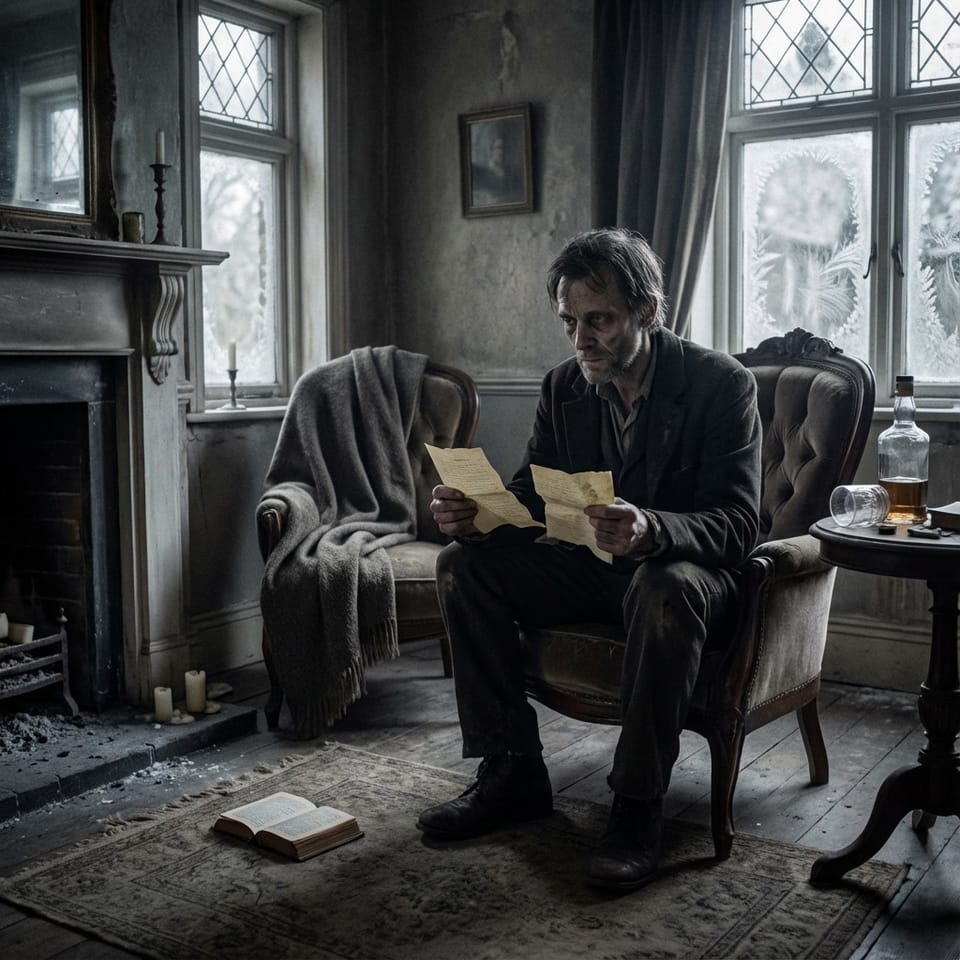
He never left the Bloomsbury house. His days were spent sitting in the parlor chair where Belinda had died, staring at frost that would not melt from the windows no matter how hot the fire burned.
He spoke to no one. Who would listen? Who would believe? The servants had fled. The neighbors shunned him. His name, once spoken with envy, now carried the weight of curse. He had become what Scrooge had been before the Spirits came: alone, despised, forgotten.
Sometimes, late at night, passersby heard him talking through the walls. Always the same words, over and over:
"I'm sorry. I'm sorry. I'm sorry."
When they found him at last, he was sitting in his chair, eyes open, face peaceful for the first time in years. The doctors called it natural causes.
The window bore a strange message, scratched in frost from outside:
PERSOLUTUM.
And somewhere in the London fog, something that had once been Ebenezer Scrooge felt the ledger close. The account was settled. The balance was zero.
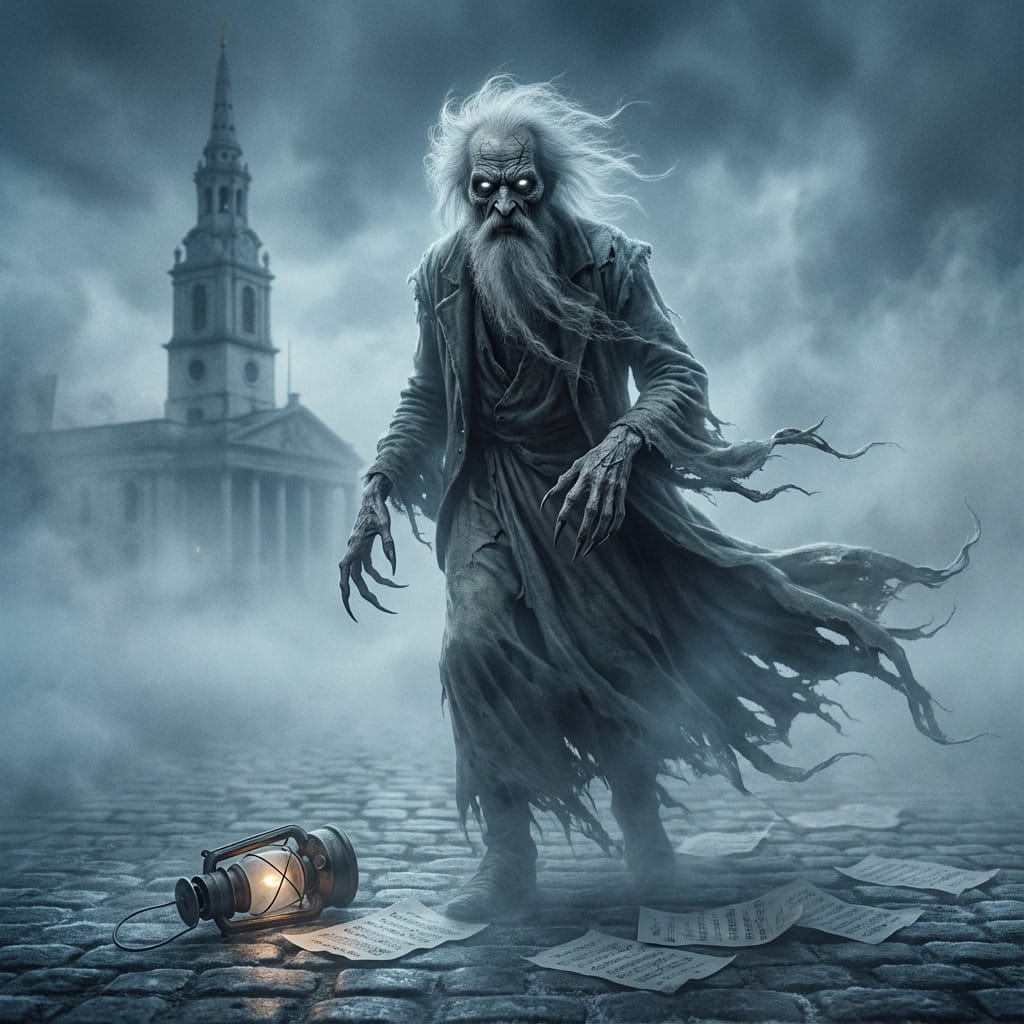
Yet there was no satisfaction. No peace. Only the endless walking, the eternal cold, and the knowledge that vengeance, like mercy, was just another door that led nowhere.