There's No Such Thing as TDS
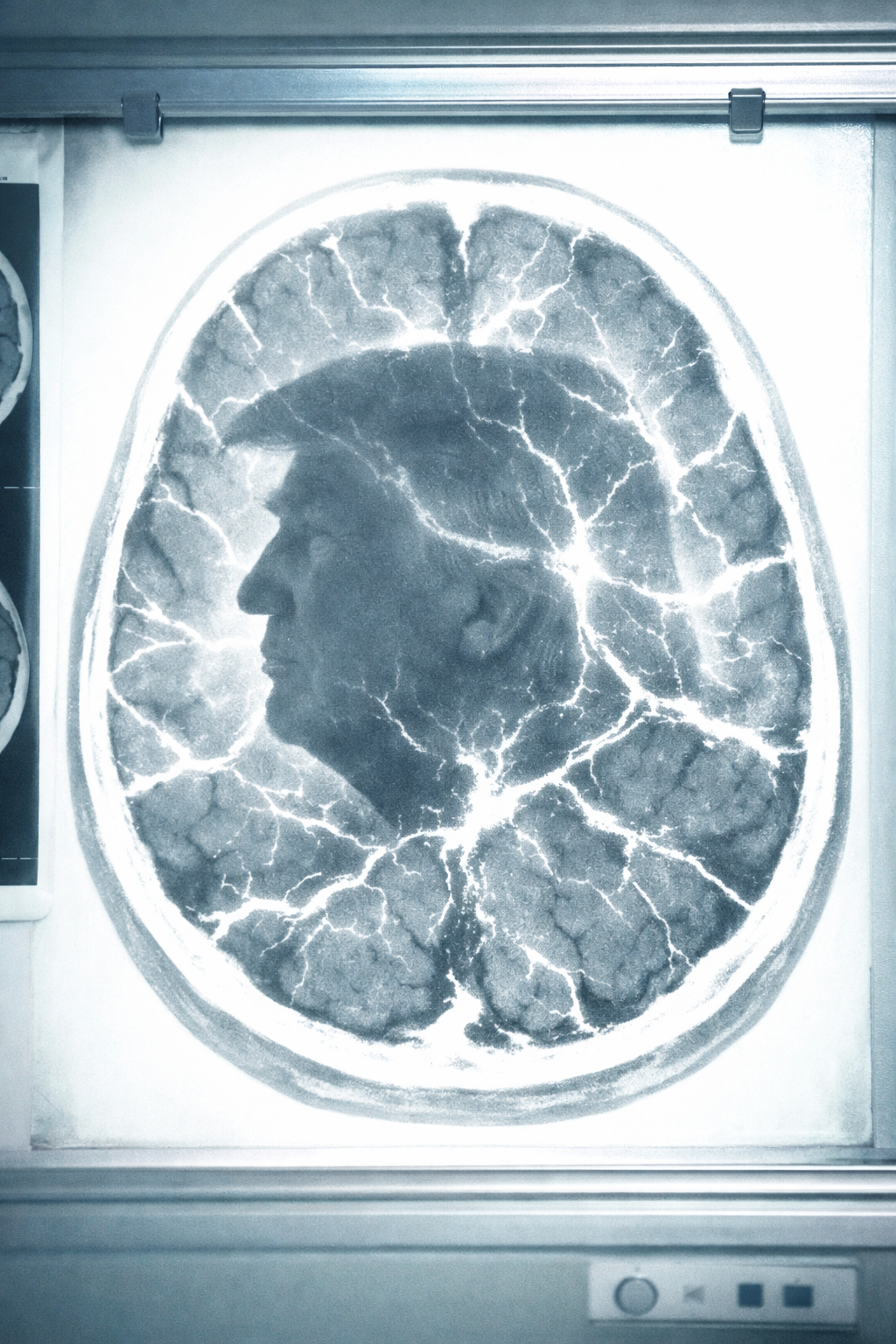
People talk about "Trump Derangement Syndrome" as if it describes an irrational reaction to one man. But that framing never really fits the behavior it claims to describe.
What people call TDS is not a psychological condition tied to a personality. It is a cultural response to disruption that a weakened system could not absorb.
In other words, the problem was never a man but a culture that had already lost the ability to handle stress without turning everything into moral emergency.
A Misdiagnosis Disguised as Insight
Calling something "Trump Derangement Syndrome" suggests fixation, obsession, emotional excess. That part is real. What is wrong is the cause.
If this were truly about one individual, the reaction would have followed familiar patterns: criticism, ridicule, electoral defeat, eventual irrelevance.
That is how stable systems process unpopular figures.
Instead, what we saw was escalation without ceiling: disagreements became existential, actions became evidence of catastrophe, unresolved institutional failures found a villain.
The pattern points away from individual derangement and toward something systemic: a culture that has lost proportional response.
This is not interpretation alone. Media coverage volume and negativity exceeded any modern president by measurable margins. Institutional norms were bent in ways debated in inspector general reports. Fixation persisted years after electoral defeat at levels unusual for any defeated candidate. These are observable patterns, not partisan grievance.
Trump as Stress Test, Not Origin
Distrust in institutions, media fragmentation, elite disconnection from the public. None of these began with Trump.
Those conditions already existed.
What Trump did was remove filters.
He violated norms openly, spoke without institutional polish, ignored the rituals that once softened power. This did not create decay. It revealed it.
In a healthier culture, disruption is metabolized. The system bends, absorbs, corrects, and moves on.
Here, it panicked.
That panic tells you more about the system than about the disruptor.
Even if every accusation were true, the response pattern (escalation without resolution, fixation without closure) would still indicate a system that has lost proportional judgment. The question is not whether the threat was real. The question is what the manner of response reveals about the responder.
When Culture Loses the Ability to Process Disagreement
A functioning culture can tolerate conflict because it still assumes truth exists independent of who tells it, that process binds even the righteous, and that opponents can be wrong without being enemies.
Once those assumptions weaken, disagreement becomes threat.
At that point, standards quietly change. Association replaces evidence. Repetition replaces verification. Intent is ignored. Moral certainty licenses its own exceptions.
This is where cultural decay becomes visible.
The reaction to Trump did not merely criticize behavior. It treated existence itself as contamination.
This is not politics but symbolic purification.
Why He Could Not Be Let Go
This is the key diagnostic question.
In a confident system, removal from power is enough. Losing elections resolves the issue.
But Trump could not be released from the narrative, even after investigations, impeachment, electoral defeat, and years out of office.
That persistence is not a sign of his power. It is a sign that the culture never repaired the breach his rise exposed.
Letting go would have required confronting deeper failures: institutional incompetence, elite loss of credibility, cultural fragmentation, broken trust between rulers and ruled.
That was harder than maintaining fixation.
So the symbol had to remain alive.
Narrative as Substitute for Performance
As material outcomes worsened and institutional confidence declined, legitimacy shifted from performance to storytelling.
The system could no longer reliably say, "We are delivering stability and prosperity."
So it said, "We are defending virtue."
Consider how institutional failures (from border management to inflation to foreign policy reversals) were reframed not as problems to solve but as distractions from the real threat. The shift was subtle but total: competence became optional so long as the narrative held.
That substitution is common in late-stage systems. Moral language fills the space once occupied by competence.
This is why accusations grew more important than evidence, and why destruction came to feel like responsibility.
Once everything is framed as emergency, restraint looks immoral.
The Inversion
The most telling sign of cultural decay is inversion.
Actions once considered dangerous become justified when aimed at the correct target. Selective enforcement, procedural improvisation, reputational destruction, guilt by association, all framed as necessary to protect democracy.
But democracy is not just outcomes. It is process plus restraint.
When restraint disappears, the word becomes theater.
Trump did not create that inversion. He made it visible.
Prognosis
Trump Derangement Syndrome does not exist. Cultural derangement does: a society unmoored from shared reality, proportional judgment, and institutional confidence, mistaking obsession for vigilance.
Trump was not the illness but the contrast dye, revealing fractures the system already had.
The damage was not his entry. It was the wound that never closed. Years later, it still hasn't.
His return proved the point. The pattern holds.