The Locusts Are Our Teachers
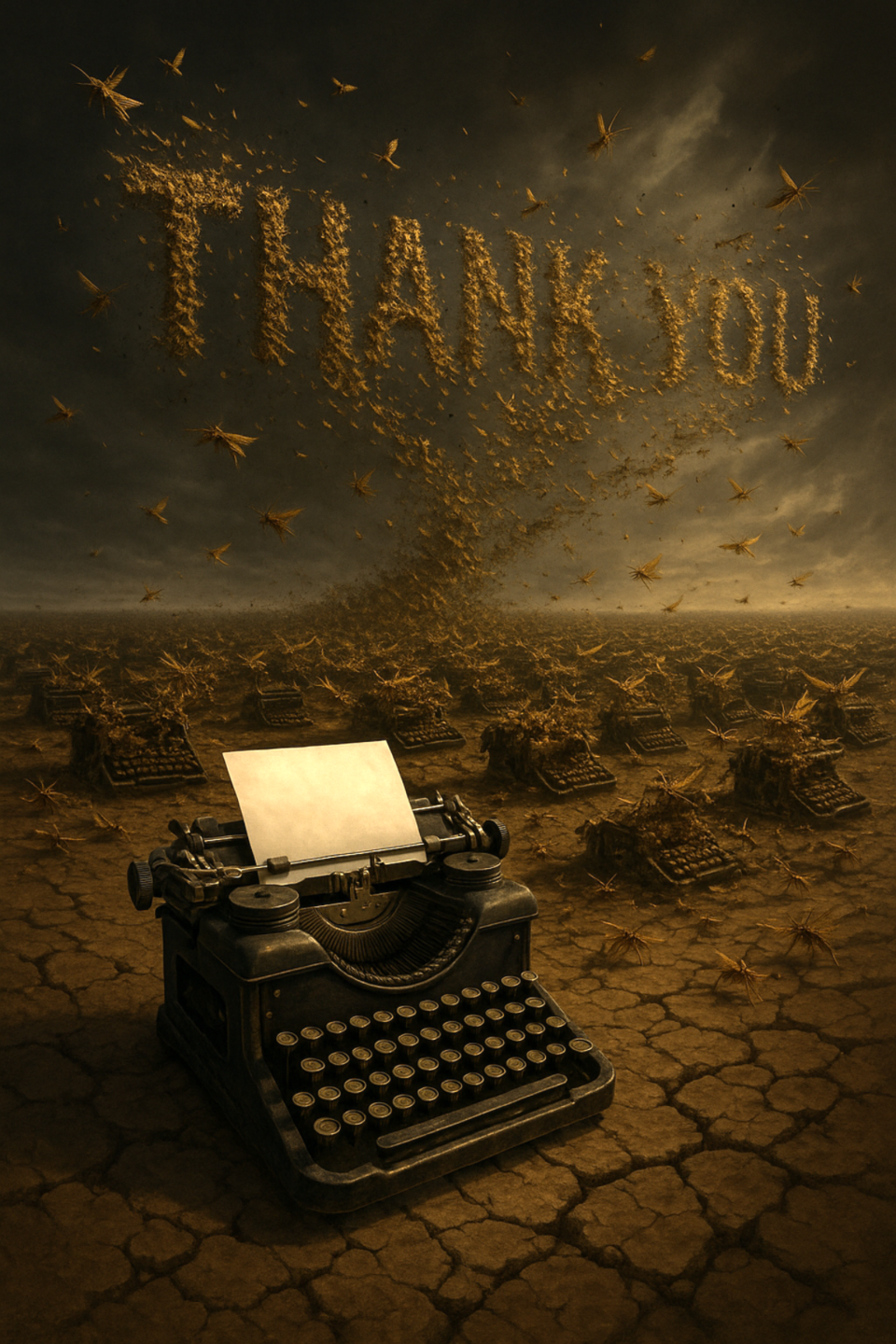
You should thank them.
The growth hackers, milestone celebrators, and template followers aren't killing your platform. They're showing you what you've been doing wrong since day one.
Every viral post you celebrated taught them the formula. Every metric you shared proved that numbers matter more than words. Every time you confused attention with connection, you wrote their playbook. They simply perfected the game you started.
The Mirror We Refuse to Look Into
Watch them work. Notice how they package vulnerability into digestible chunks. See how they transform community into conversion rates. Observe their ability to make automation feel authentic.
This is mastery.
Not of writing, but of systems. Not of thought, but of patterns. They understood something you missed: platforms reward consistency over creativity, format over form, predictability over surprise.
You built the stage. They learned the dance. Now you complain that everyone moves the same way.
The Beautiful Efficiency of Decay
Platforms need to rot. This isn't failure; it's design.
The cycle runs three years. Birth brings the pioneers who crave new territory. Discovery attracts creators seeking fresh audiences. Optimization summons the locusts with their frameworks and funnels. Death arrives when everything sounds identical. Then rebirth begins elsewhere, and the carousel spins again.
This pattern protects good writing by creating contrast. When feeds fill with processed content, original voices become precious. When everyone shouts, whispers gain power. When templates dominate, the strange becomes magnetic.
The locusts drive real writers underground, where the best work has always happened. Basements and backrooms. Forgotten forums. Email chains between three people who actually read. These spaces multiply when platforms become unbearable.
Writers Who Thank the Algorithms
Three species thrive during platform decay:
The Archaeologist digs through dead feeds, finding buried genius from 2019. She republishes forgotten posts, credits lost voices, builds museums from abandoned blogs. Her curation matters more as production accelerates. She knows that gold sinks while garbage floats.
The Hermit uses noise as camouflage. While others chase trending topics, he writes thousand word meditations on doorknobs. His subscriber count stays frozen at 47. Those 47 people would follow him into war. He experiments wildly because nobody's watching, inventing forms that won't surface for years.
The Parasite feeds on the feed itself. She writes about writing about writing. Her subject is the platform's decay, documented in real time. Meta enough to transcend, specific enough to matter. When Substack dies, her archive becomes history.
The Platform Paradox
The promise is escape from algorithmic pressure. Instead, it recreates the same dynamics with different vocabulary. "Newsletter" replaces "blog." "Subscribers" replaces "followers." "Recommendations" replaces "retweets."
The truth? You can't escape the game by building another game. You can only choose which game to lose.
Sustainable and scalable are always enemies. One requires patience; the other demands speed. One builds soil; the other strips it. Some platforms try to marry them. The locusts have arrived for the wedding.
The platforms that survive longest plan their own obsolescence. They know growth kills intimacy. They build exit ramps before entry points. They celebrate when their best users leave.
Instructions for Becoming Unfindable
Write sonnets about spreadsheets. Publish field notes from imaginary expeditions. Create manifestos for problems nobody has. Use formats that died before the internet was born.
Post when everyone's asleep. Share on platforms without share buttons. Build friction into every interaction. Make your subscription process require three emails and a phone call. Call your newsletter something unpronounceable.
These aren't tactics for growth. They're antibodies against it.
The Roots That Feed on Rot
Decomposition creates composition. Platform graveyards fertilize new forms. Today's dead feed becomes tomorrow's breakthrough.
The locusts aren't destroying anything. They're composting. They break down complex ecosystems into digestible nutrients. They prepare soil for seeds they'll never see grow.
Your job isn't to fight them or join them. Your job is to plant something in the wreckage they leave behind. Something slow. Something strange. Something that won't make sense until three platforms from now.
Write something today that would embarrass you to monetize. Create work that confuses recommendation engines. Build things that metrics can't measure.
The locusts are here. Good.
Now you know exactly what not to do.